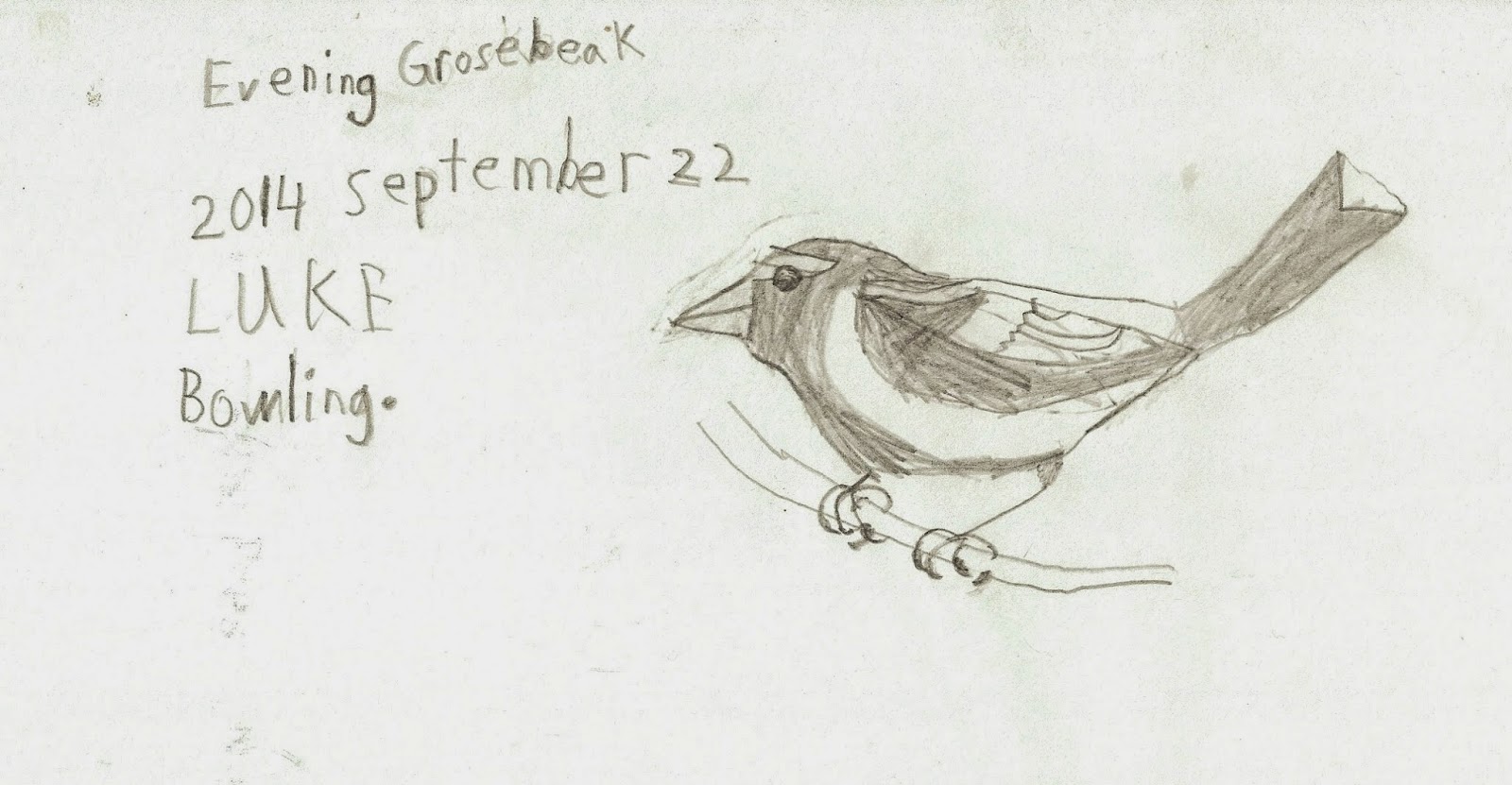

Tuesday, September 23, 2014

Monday, September 22, 2014
INSECT COLLECTING
Insect collecting is one of my favorite things to do. It is fun doing it, but its not just to have fun, its to study and learn more about them. My favorite group of insects are the butterflies and moths. All of them really have iridescent brown scales on their wings, but when the light reflects on them, they become the beautiful creatures we see fly around our backyards.
In this post I wanted to talk a little bit about insect collecting.
This is a link to the kit that I have:
Insect Collecting & Mounting Kit
This is a link to the kit that I have:
Insect Collecting & Mounting Kit
Step #1. The Net.

The net is used to catch most of your insects. Mine is 2' deep and you would want to have one at least this deep...the deeper and wider, the better. When you see one and are about to swing, try and sweep in on it from above. As soon as it is in the net, quickly either put it on the ground or fold it over. Either way works just fine, although, I fold it.

Step #2. R.I.P.
For this you only need a jar with plaster or a cotton-ball and poison. Just "load" your jar with the poison and drop your bug into his chamber of doom.
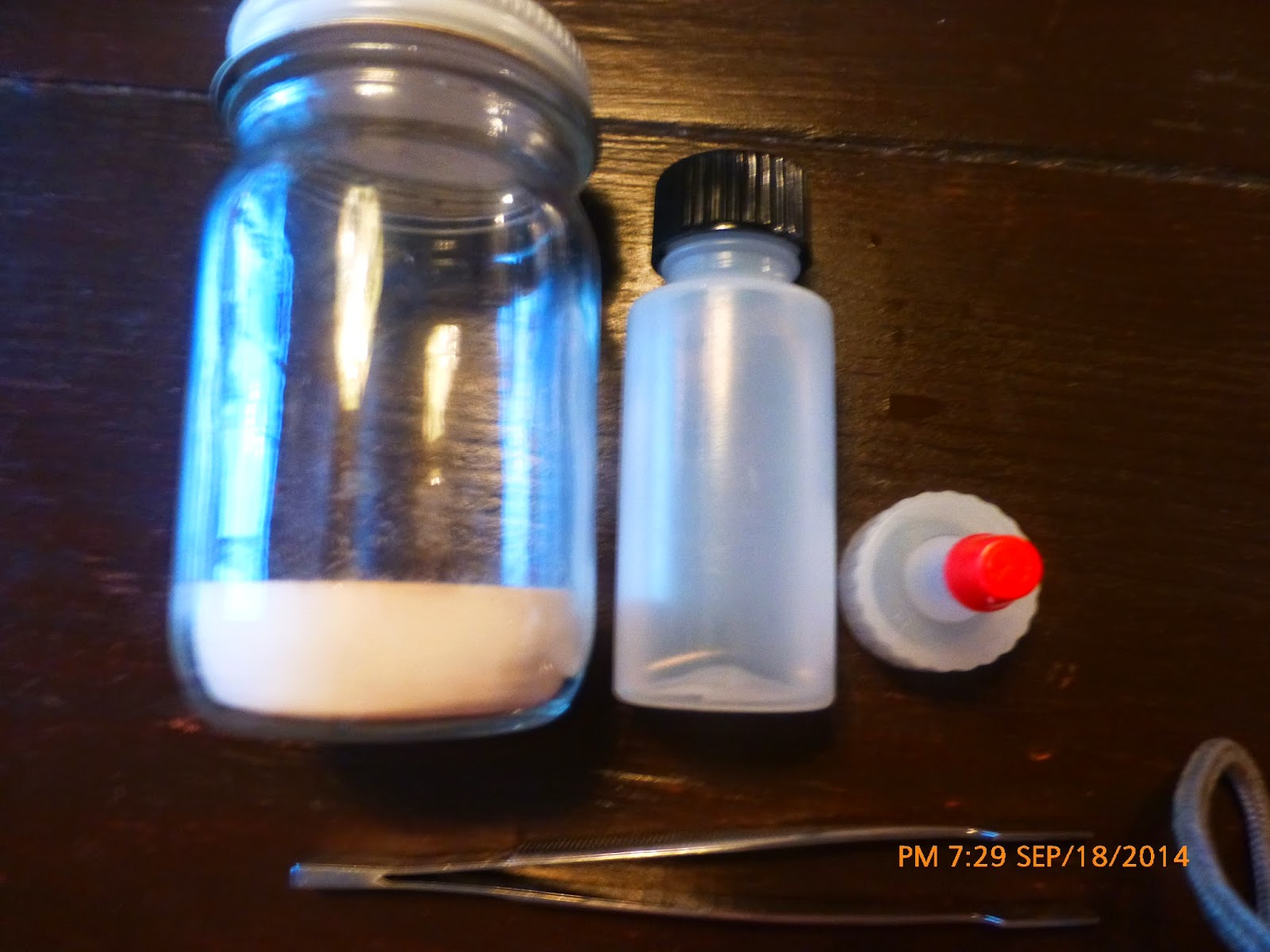
Step #3. Preserving
Fold a butterfly or moths wings together and slide into a glassine envelope. It should stay good like that for a surprisingly long time, up to 60 years! Use Vapor tape to preserve pinned and processed insects.

Step #4. Labeling, pinning and drying.

Use tweezers to spread wings (if it has any) and slide a pin through its thorax (middle part between head and abdomen). Spread its wings with wax-paper an a board made for this purpose. On one label write the place and date of capture along with capturer's name. On another write latin and common names.

These are some of the butterflies and moths that I have collected and processed.
POST BY ETHAN
Wednesday, September 17, 2014
MONARCH TAGGING
I am loving having a Monarch tagging kit. I think that the best part of it is holding these amazing insects.
Click here to purchase a Monarch Tagging Kit.
Monarch tagging is just one of the ways that we can help this amazing butterfly. Each tag has its own unique number and letter code that you write down on your data sheet, along with gender, date, and place of capture.


 |
| Image Source |
The Monarch pictured above is a male, and the way you can tell is, on both hind wings there is a little sack and his veins are thinner then a females.


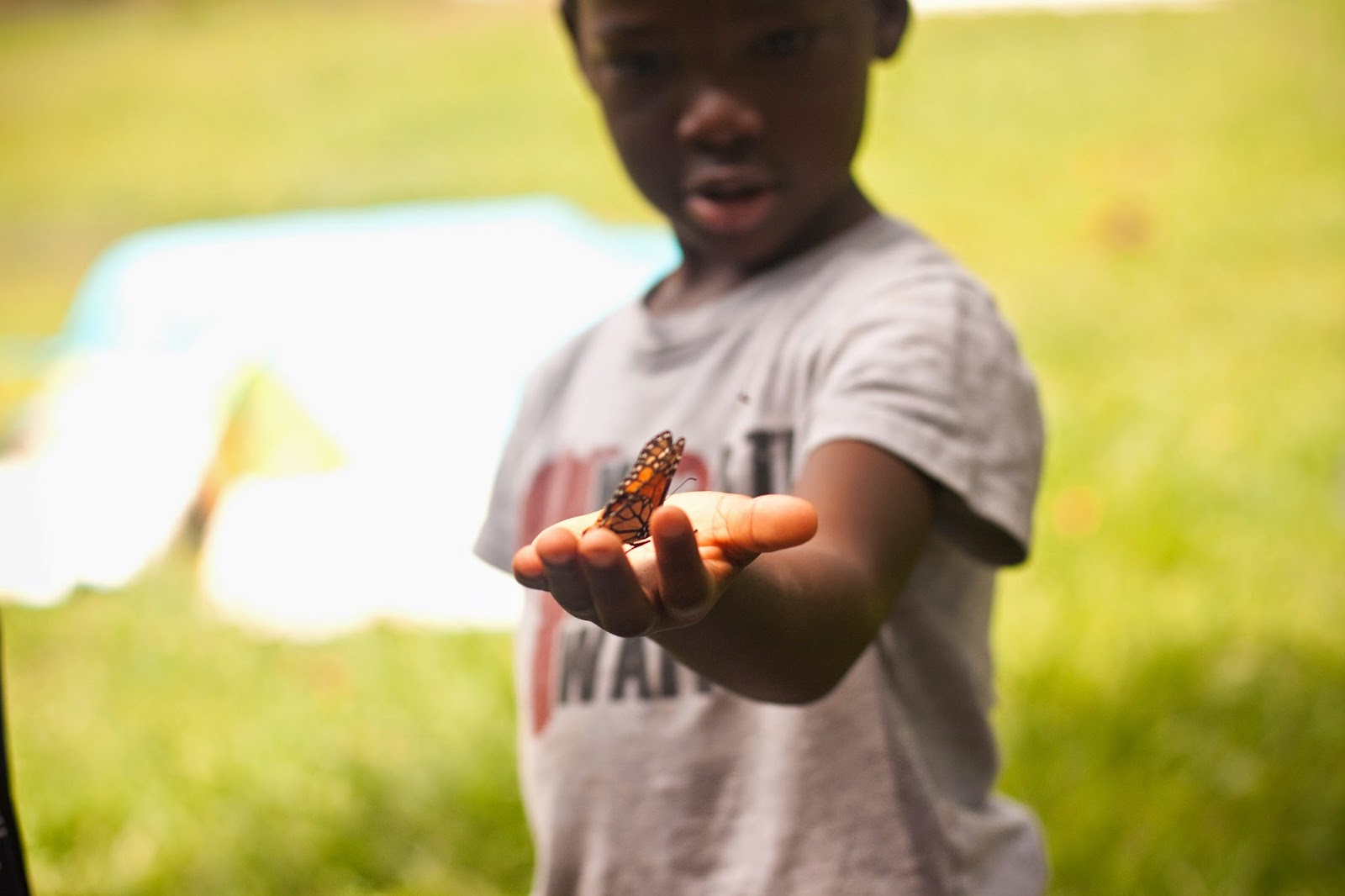


They are one beautiful butterfly that I would like to try to help keep alive.

Tagging is one of the ways that we can help, but another is planting butterfly gardens. For this specific species you only need to plant milkweed which serves as a dual-purpose plant, being food for both adult and larvae. By doing these two little things, we might be able to save these beautiful butterfly.

This is a Monarch Caterpillar on a Milkweed plant.
Sunday, August 24, 2014
WHAT IS AN INSECT?
If you took all the insects and animals in the world and counted them , there would be more insects than all the other animals in the world put together!!!
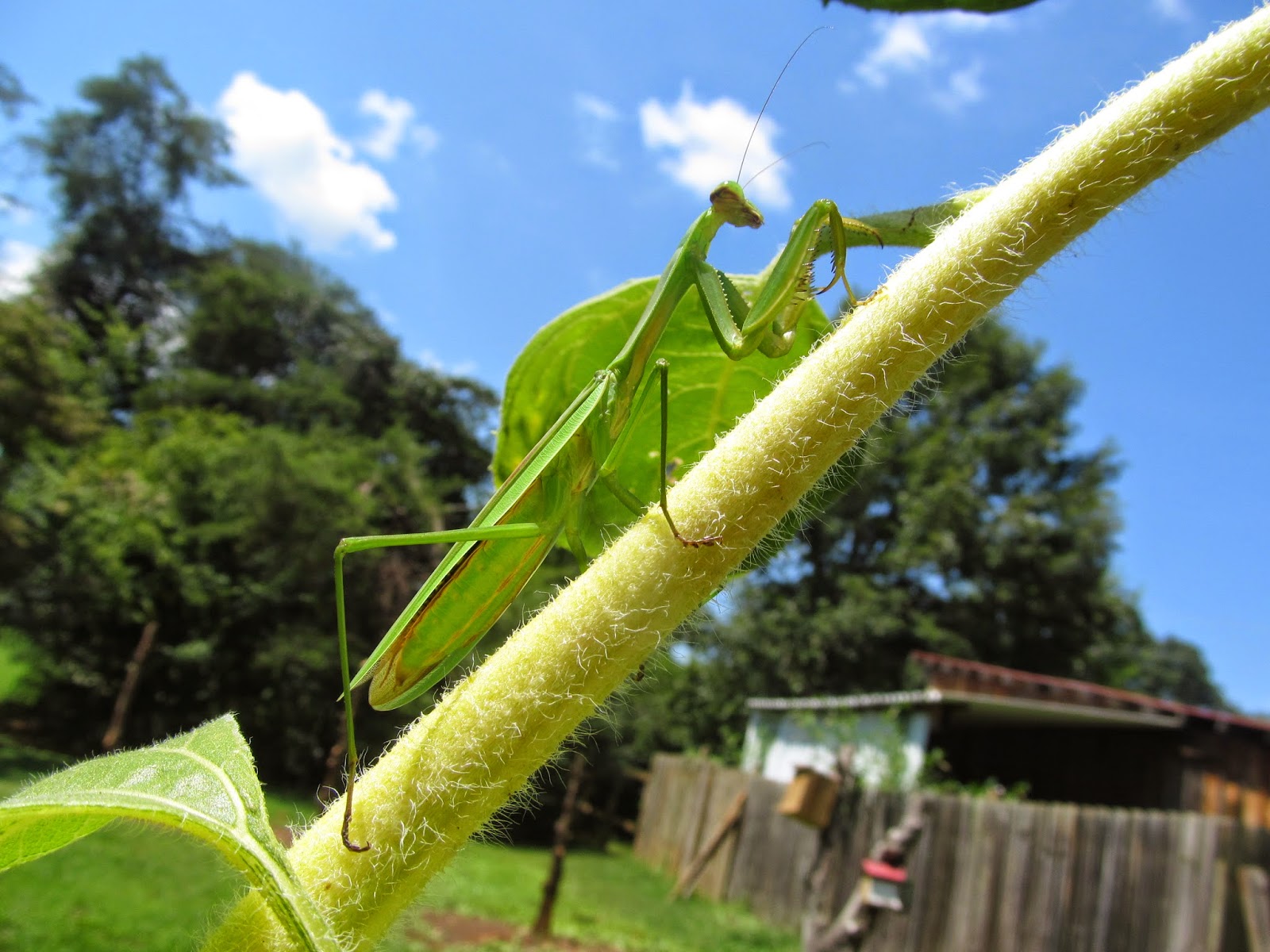
Insects have a hard exoskeleton, three pairs of jointed legs, three body parts, compound eyes and two antennae.
All Insects start their life as eggs. Some hatch out to become larvae, just like my Tobacco Horn- worm caterpillars below. Then they emerge as adults( beetles, wasps and hornets, butterflies, etc.).


It can also turn into a moth.


Others, such as mantes, dragonflies, and a few others hatch and become nymphs. Mantis nymphs look exactly like the adults, just smaller, and without wings. Dragonfly nymphs look like little aliens, with a huge bottom lip to help it catch prey, such as minnows, mosquito larvae and eggs, etc.


But no matter how big or small, colorful or plain, they are all beautiful in their own little way (:
Post by Ethan
Tuesday, August 19, 2014
BIRD BANDING
We went to a bird banding at Seven Islands State Birding Park and saw two, new, very cool birds. Here is all the equipment they use there.

They use these mist nests to catch birds. They don't get tangled up, instead it has pockets that they fly into. Here they are checking the nets.

Here they are taking a Eastern Phoebe out of a net.
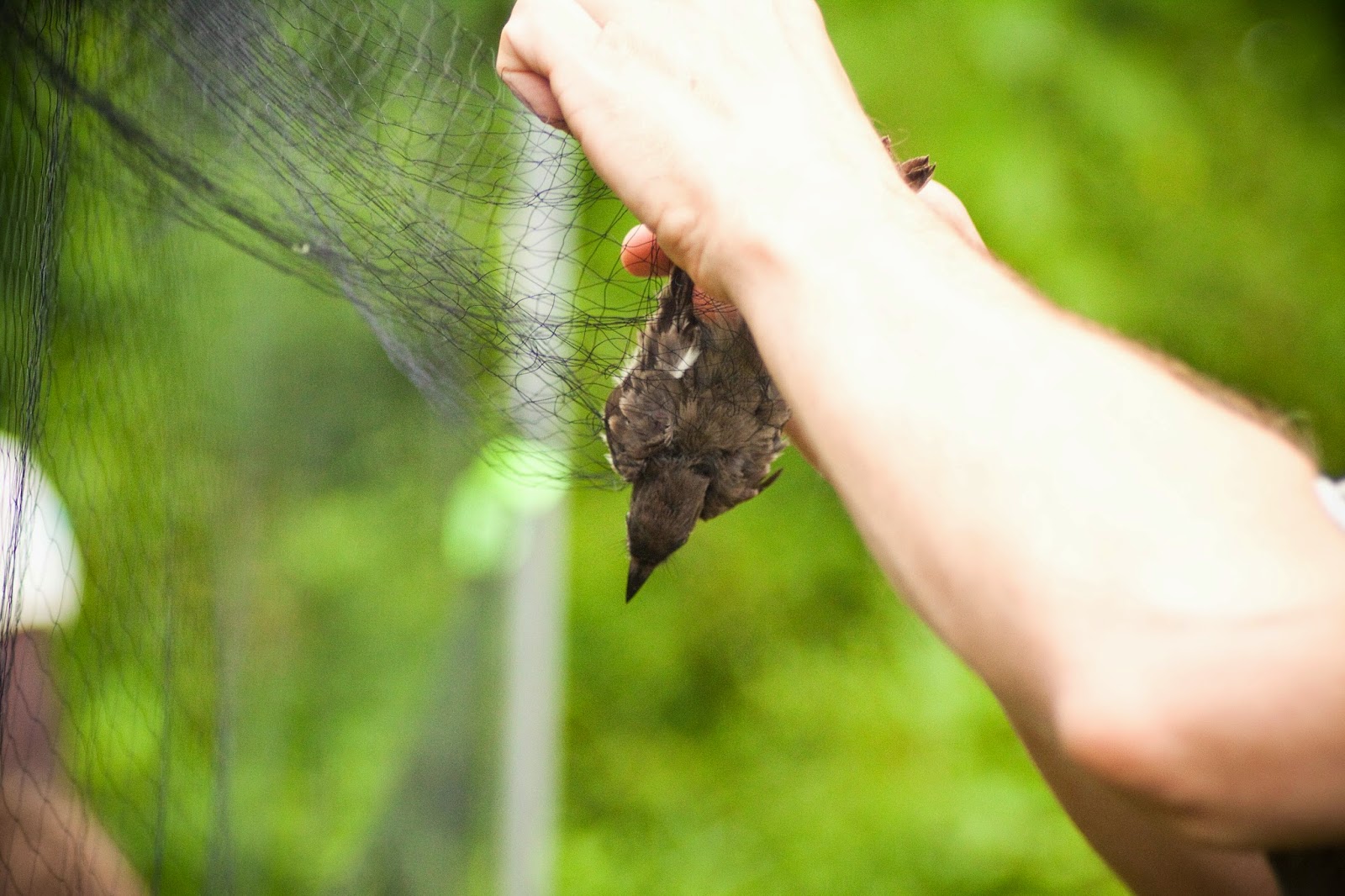
To band the birds, they use lots of special equipment, including: pliers, small aluminum bands, a scale, lots of different kinds of rulers and field guides and lots other stuff. Here they are banding a Yellow Warbler.

They blow on a birds belly area to look for fat and a brood patch, a bare spot on a nesting female to help keep her eggs warm.


They weigh them on this type of scale in film canisters or these little bags.

They keep records of everything about the birds they catch.

They have to take down the nets after-words, or else birds might get caught and there will be no one to take them out.


In the end,we all even got to release a bird.


Post by Ethan
Monday, August 18, 2014
OPERATION HORN-WORM


I misted them once a day, just to make it easier for them to hatch. They turned from green, yellow and brown, to a dark earthy brown. Then, one morning I noticed that one cocoon
was laying on its side of the container, empty? Then, I noticed something else...
there was a big Tobacco Horn-worm Moth trying to climb up the side of the container!!! It's tongue was about 5" long! Its wings had still not dried yet so it probably hatched that morning. Some other names for the tobacco Horn-worm moths are Six-Spotted sphinx and Tobacco-Fly. The Sphinx are definitely my favorite moths.

Post by Ethan
Subscribe to:
Posts (Atom)